Over the last few years, most conversations about enterprise AI have focused on the technology.
Which model should we use? Which platform is better? What can the latest AI agents do?
These are important questions, but I don’t think technology is the biggest challenge anymore.
AI is advancing faster than most organizations can put it to work. Models are getting better, platforms are maturing, and agents can take on increasingly complex tasks. Yet many enterprises are still trying to move beyond pilots and turn AI into meaningful business outcomes.
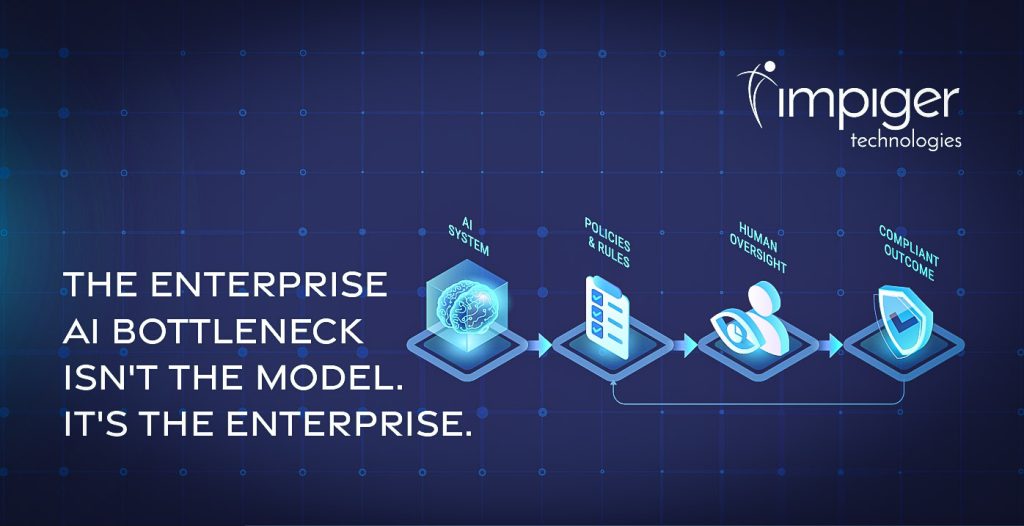
The challenge is often not the AI itself. It is everything around it.
We keep asking whether AI is ready for the enterprise. The more important question now is whether the enterprise is ready for AI.
AI Is Exposing the Gaps We Already Have
Most large organizations have built their technology landscape over many years. There are legacy systems that still run critical parts of the business. Data sits across different platforms. Processes move between teams and applications. A lot of valuable business knowledge still lives in documents, spreadsheets, emails, and people’s experience. AI does not automatically solve this complexity. In fact, it often makes these gaps more visible.
An AI agent may be capable of identifying a customer issue and suggesting the right action. But does it have access to the right information? Can it connect customer data with billing and operational systems? Does it understand the organization’s policies? Can it actually take the next step?
The intelligence may be ready. The surrounding enterprise may not be.
It Is About More Than Data
Data readiness is an important part of enterprise AI, but it is only one part of the picture. AI also needs context. It needs to understand how the business operates, including its processes, policies, customers, systems, controls, and business rules.
This becomes even more important as we move from AI that answers questions to AI that can take action.
If an AI agent is going to participate in a procurement process, for example, it needs more than supplier data. It may need context from contracts, purchase orders, inventory, delivery schedules, approval rules, and compliance requirements.
That is why integration matters so much.
The real value of enterprise AI will come when intelligence can work securely across the systems where business already happens.
We Need to Rethink the Process, Not Just Add AI to It
There is a temptation to take an existing process, add AI to one or two steps, and call it transformation.
That can improve productivity, but the bigger opportunity is to rethink the process itself.
Many enterprise workflows were designed around people reviewing information, making decisions, and moving work from one stage to another.
What happens when AI can continuously monitor that process?
What happens when routine decisions can be handled automatically within clearly defined boundaries?
Where should people continue to make the final call?
These are the questions that will determine whether AI simply makes existing processes faster or actually changes how the organization operates.
People will remain central to that model. Their role will increasingly focus on judgment, exceptions, relationships, creativity, and decisions where human accountability matters.
Autonomy Needs Accountability
As AI takes on more responsibility, governance becomes even more important.
If an AI system is only generating a summary, the risk is relatively contained. If an AI agent is initiating an action involving a customer, supplier, employee, financial transaction, or compliance process, the stakes are different.
Organizations need to know what an agent is allowed to do, what information it can access, when it needs human approval, and who is accountable for the outcome.
Governance cannot be something we think about after AI has been deployed.
It needs to grow alongside AI adoption.
The goal should not be unlimited autonomy. It should be governed autonomy, giving AI enough freedom to create value while keeping the right controls and human oversight in place.
Enterprise Readiness Will Matter More
AI technology will continue to improve, and access to sophisticated models will become easier.
As that happens, having access to AI itself will become less of a differentiator.
The real advantage will come from how well an organization can put AI to work.
Are the systems connected?
Is the right context available?
Are processes ready to change?
Is governance built in?
Do people know how to work alongside AI?
And, most importantly, is AI solving a real business problem?
These may sound like simple questions, but answering them requires much more than choosing the right technology.
For the last few years, we have been asking:
What can AI do for our business?
I think the next question for enterprise leaders is more important:
What needs to change in our business so that AI can deliver its full potential?
The next phase of enterprise AI will not be won by technology alone. It will be shaped by how well organizations bring together their people, processes, platforms, data, and governance.
AI will keep moving forward.
Enterprises need to be ready to move with it.
The AI may already be ready for the enterprise. Now the enterprise has to get ready for AI.